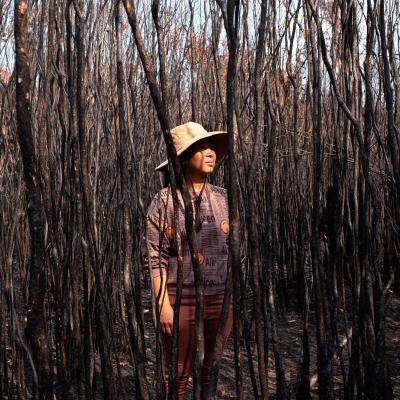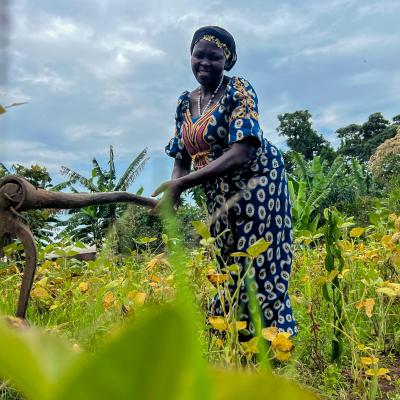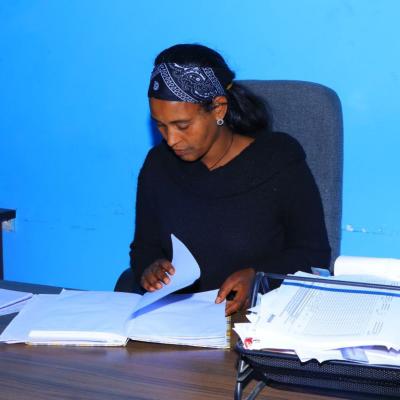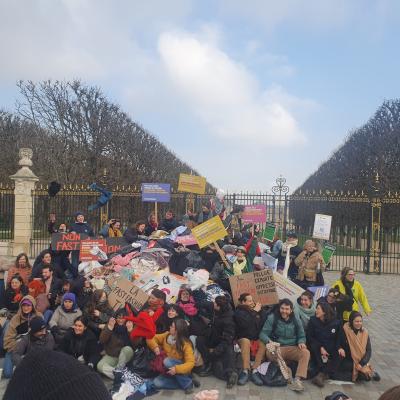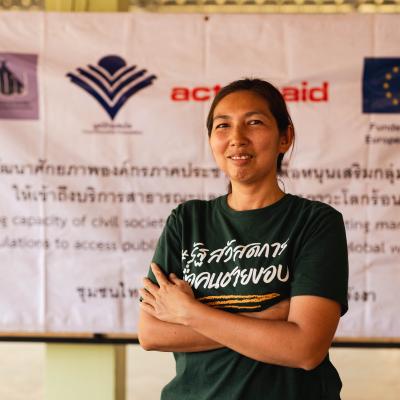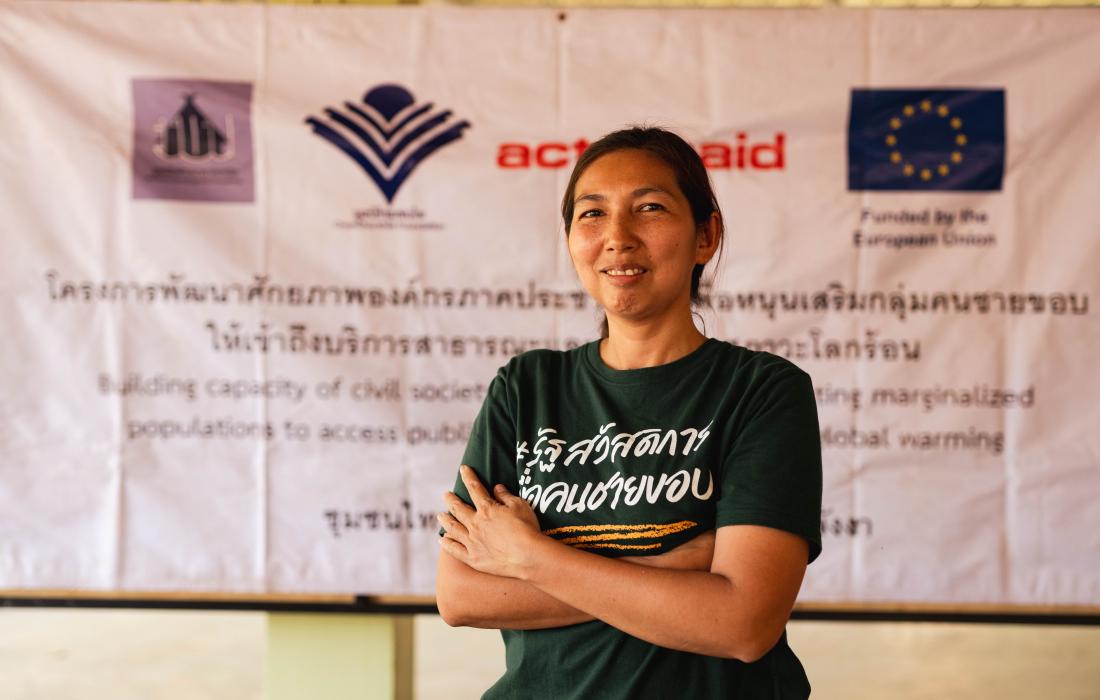
From backyard to frontline, Chanicha's work as community leader of Ban Sai Thong.
Stretching as far as the eye can see, lush green forests line the landscape. Along the roads are agricultural lands of local residents, from rubber plantations to palm oil farms. This is the setting of Ban Sai Thong, where Chanicha Kongchan was born and raised.
Although the area is surrounded by abundant natural resources, livelihoods and income opportunities remain largely limited to agriculture as land tends to be privately owned or part of conservation, there is lack of investment in local agriculture or access to markets, and a high population of Thai stateless people who face limitations accessing public services due to lack of documentation. For a period of time, this reality led Chanicha to seek work outside her hometown.
Eventually, however, she returned home and volunteered for the Ban Mankhong Programme - a secure housing programme led by Thailand’s Community Organisations Development Institute focusing on improving people’s quality of life and helping people access support from government agencies.
Community leaders soon began to notice Chanicha’s potential and invited her to join their team. Over time, she grew into one of the key driving forces behind community development.
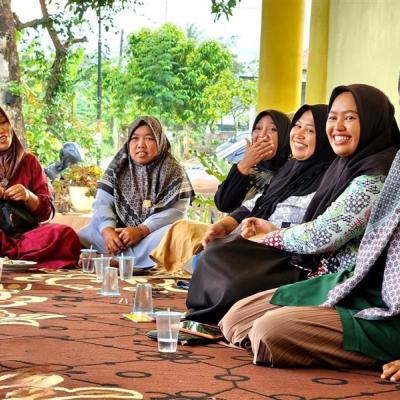
In a context where the norm is for women to stay at home due to traditional belief systems perpetuated by patriarchy, Chanicha explored, in a gender justice and community leadership training, the power of women.
Eventually, she became an assistant village head, working as part of a leadership team led by a female village head and collaborating with government agencies, private organisations, and civil society networks.
Chanicha first saw change in her personal relationships; she says
“[Now] I can speak openly with my husband and say something like, 'this is what I want to do. I want to go there. I want to learn these things. I need you to understand me, because I want to gain knowledge to help our community'. If we don’t start with ourselves, our community will never move forward.”
She then recognised the power of her peers. Of women leaders, she says;
“They tend to lead with empathy, gentleness, and careful consideration. When coordinating, sharing information, or supporting others, they don’t rely on authority or force to manage people.”
Through organising with other leaders, she realised that many people did not know of their right to public services and how to access these services, since many displaced Thai people do not possess a national identification card.
Chanicha says “I came to understand that the 13-digit number is not just a number on an ID card. It represents the fundamental right to live. For instance, without that 13-digit number, people cannot travel outside their area on their own. If they need to travel, they must obtain permission and an official signature from the district chief.”
Chanicha supported people to understand their rights to universal health care, and to newborn support. She shares this knowledge, offers guidance, and helps residents access the welfare benefits they should rightfully receive, and she works with others to ensure that people’s voices are elevated regionally and nationally.
In addition, she is involved in an initiative to produce biochar, charcoal - in an environmentally friendly way. This provides hope and a sense of community at a time when the cost of living continues to rise.
Chanicha says “Don’t think that you can’t do it. Try giving it a chance first. I never thought I would become a community leader either. I thought I would simply stay home and raise my children. But once I did it, I realised that every one of us has potential”.